Affiliate Programs for Coaches: How to Choose (2026)
Mike Giannulis··8 min read
Most lists of affiliate programs for coaches are built for volume: hundreds of offers, ranked by commission, with little thought about who is on the other end of the link. Coaches and consultants can't work that way. Your audience trusts you because you give them careful advice. Every recommendation you make, paid or not, either adds to that trust or spends it.
This guide gives you a practical way to choose affiliate programs for consultants and coaches: five questions to ask before you promote anything, the red flags that should end the conversation, and a worked example using Dictate's own program so you can see the questions applied to a real offer.
Why affiliate programs for coaches need a different filter
A general affiliate marketer can switch niches next month. You can't. Your list, your podcast guests, your mastermind members and your LinkedIn followers are the same people who buy your coaching or hire your firm. That changes the math of every recommendation:
Relevance beats reach. An offer that fits your audience's next step reads as advice. One that doesn't fit reads as a sales pitch.
Your reputation carries the risk. If the product overpromises, your audience remembers who sent them.
Your time is the scarce resource. You need programs with materials you can adapt quickly, not ones that expect you to write everything from scratch.
Good coaching affiliate programs respect those constraints. The five questions below help you spot them.
Five questions to ask before you join any affiliate program
1. Is it relevant to what your audience is already trying to do?
Start with the problems your clients bring you. A business coach hears about positioning, lead generation and credibility. A leadership coach hears about influence and visibility. A consultant hears about differentiation and proof of expertise. The right offer is one you could mention in a normal coaching conversation without changing the subject.
A useful test: could you explain why this product fits your audience in two sentences, without mentioning the commission? If not, keep looking.
2. Is the price point a sensible next step?
High-ticket offers are tempting because each sale pays more, but they ask your audience to make a big decision based on your recommendation. A low-cost entry offer is often the better fit for a first recommendation: it's easy to say yes to, easy to evaluate and easy to walk away from if it isn't right. You can always recommend deeper services later to people who found the first step useful.
3. Can you describe it honestly in plain words?
Read the sales page as your most skeptical client would. Look for promises about income, outcomes presented as certain, or unrealistic speed. If the offer only works when it's oversold, it will cost you trust even when it converts. The best programs publish rules that ban those claims for affiliates, because the seller wants the same thing you do: buyers who got what they expected.
4. Does the program give you useful materials?
Look for swipe emails, social images, short videos and ad copy you can adapt to your own voice. Good materials save you hours and keep your claims accurate, because the product facts are already checked. Check whether the program lets you adjust tone and length while keeping the facts and disclosures intact.
5. Who tracks the sales and who pays you?
When an established affiliate marketplace tracks clicks, records sales and pays commissions, you get independent reporting and a payout process that doesn't depend on the seller's spreadsheet. If you're weighing the networks themselves, our comparison of JVZoo vs ClickBank vs Digistore24 walks through how each one handles approval, links and reports.
Red flags that should end the conversation
The program asks you to buy something before you can join or earn.
The sales copy promises income, clients, or guaranteed outcomes.
Swipe copy includes testimonials you can't verify, or asks you to imply you've used the product when you haven't.
There's no clear guidance on disclosing your commission.
The seller wants your bank details directly instead of paying through a known marketplace or payment system.
Traffic rules are missing, vague or encourage spam and purchased lists.
None of these are about the size of the commission. They're about whether the program will protect the relationship you've built with your audience.
A worked example: the Dictate affiliate program
Here's how the five questions apply to Dictate. We run this program, so treat this as a transparent example rather than a neutral review, and run the same questions on any offer you're considering.
Relevance
Dictate helps experts plan and create nonfiction books by talking instead of typing. Coaches and consultants are the core audience for that: people with a method they teach every week, a framework clients keep asking about, and a book they keep meaning to start. If your audience includes people who have said "one day I'll write a book," the offer fits a conversation they're already having. (For the deeper case, see our post on turning a coaching methodology into a book.)
Price point
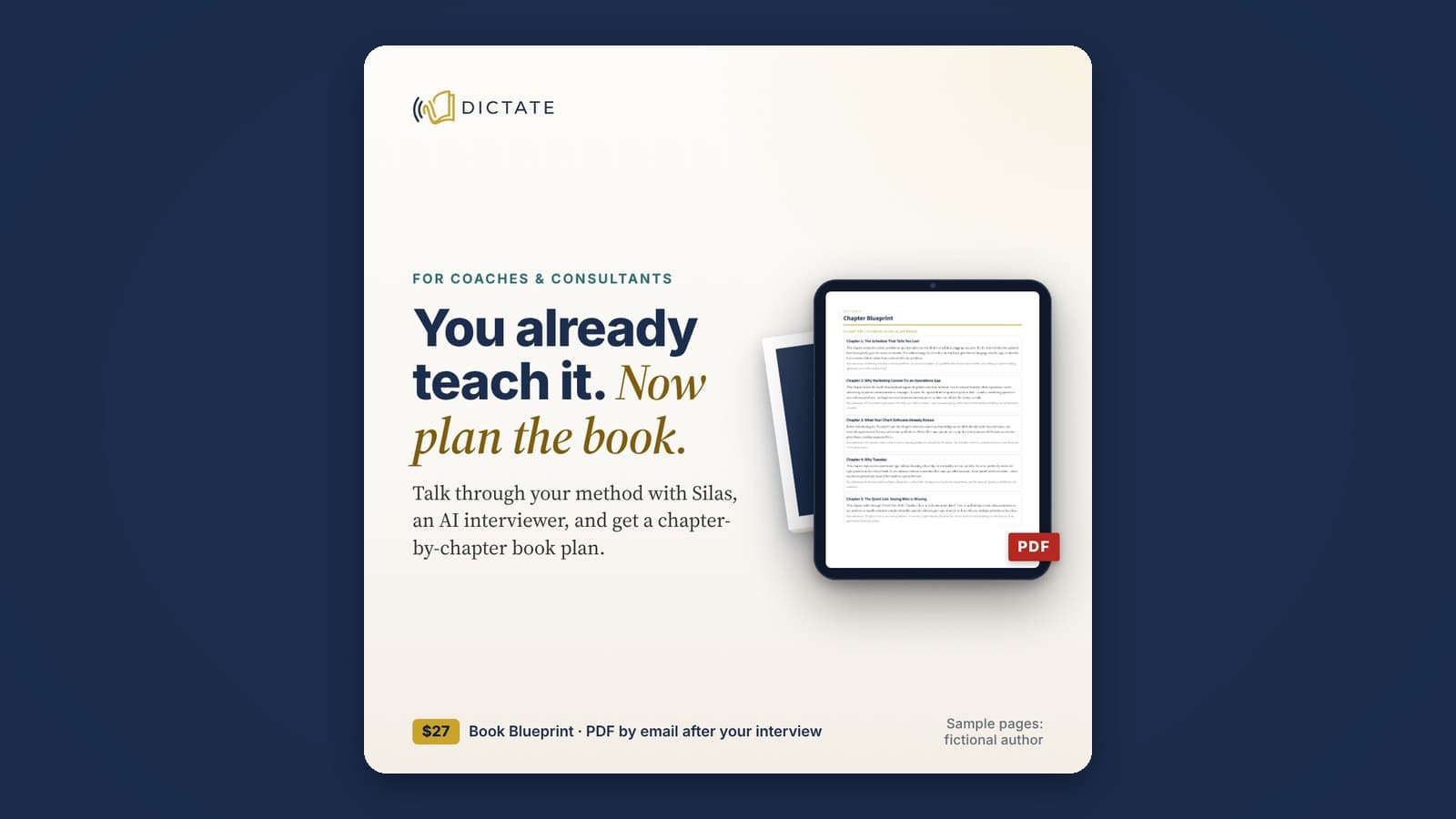
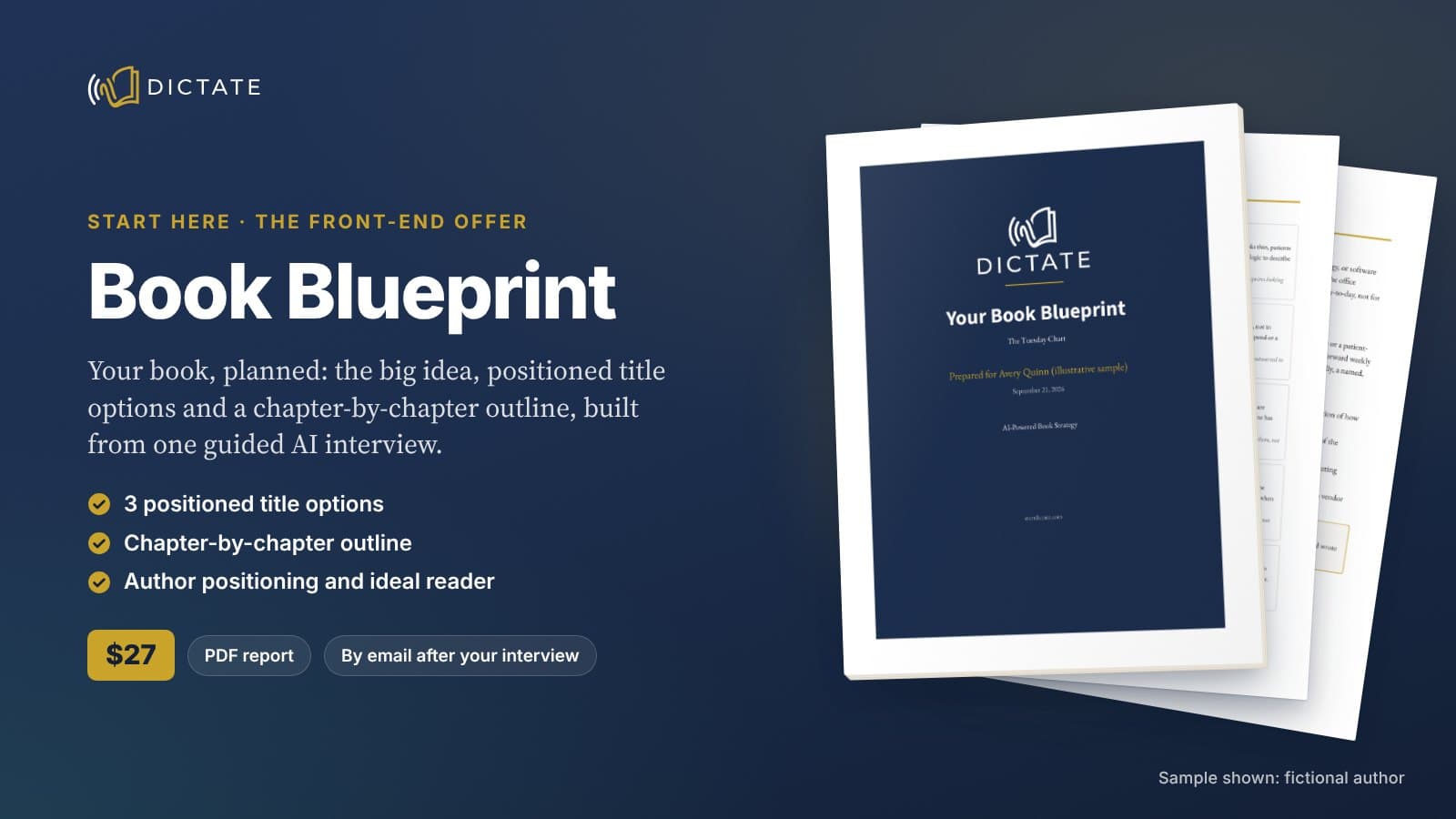
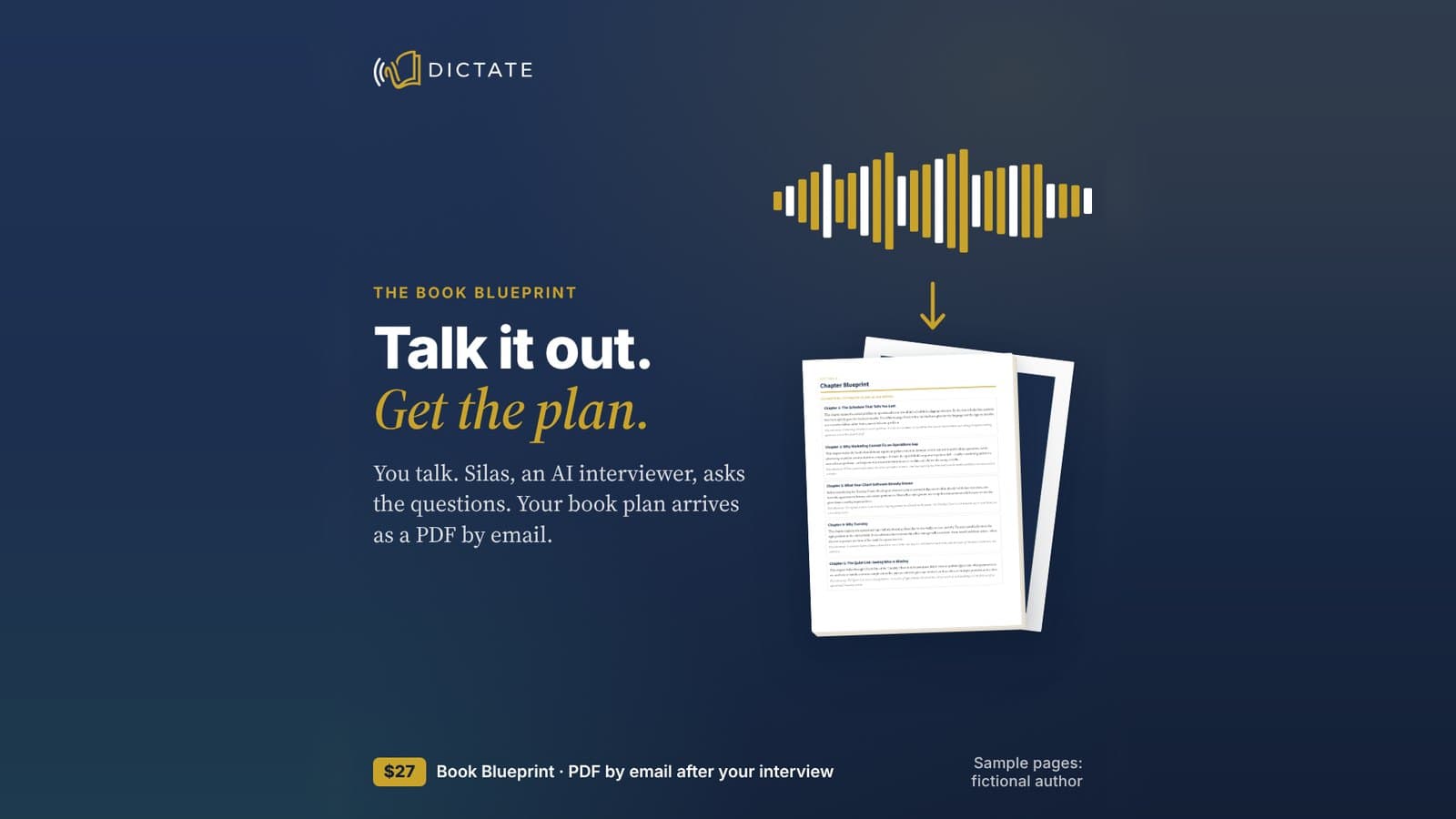
The front-end offer is the Book Blueprint at $27. It's a plan for someone's book, not a finished book. The buyer books a short strategy call, then does one spoken interview with Silas, Dictate's AI interviewer, and receives a branded PDF by email after the interview. The Blueprint includes:
a cover preview and the book's big idea;
three positioned title options and a chapter-by-chapter outline;
author positioning and a clear picture of the ideal reader;
a map of three to seven books already in the category;
a sample paragraph written in the author's voice.
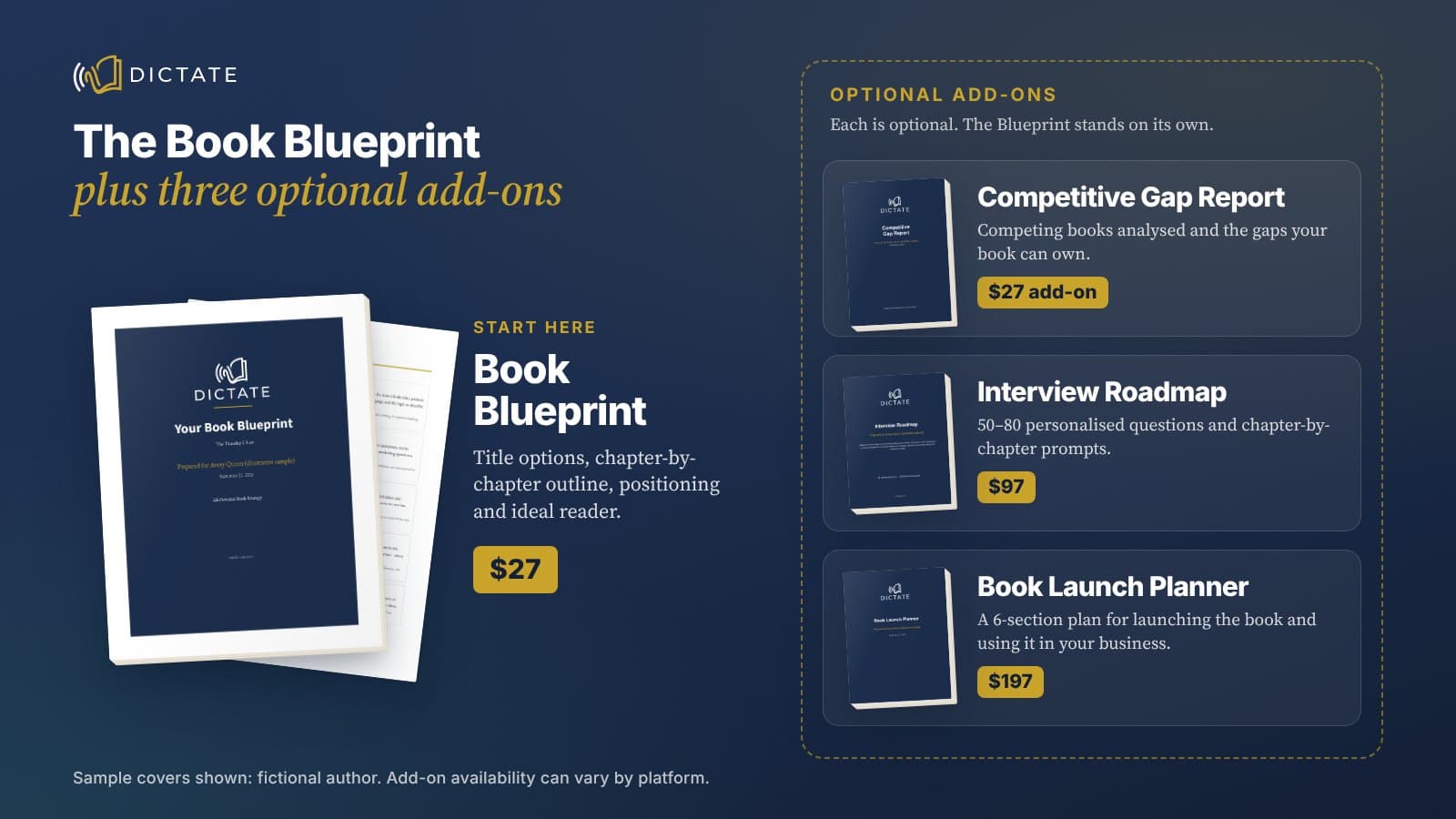
After checkout, buyers see two optional add-ons: the Interview Roadmap ($97) and the Book Launch Planner ($197). On marketplaces that support it, a Competitive Gap Report ($27) is offered at checkout. All are optional.
Honesty
Dictate's affiliate rules ban the claims that damage trust: no income or client promises, no promises of bestseller status, no delivery-time promises, no suggestion that the $27 Blueprint is a written or published book, and no invented testimonials or experiences. That makes the offer easy to describe accurately: a clear, affordable plan built from one guided interview.
Materials
Affiliates get a library with a five-email promotion sequence, standalone email angles, Facebook ad concepts, organic social captions, social images in square, portrait and story sizes, short promo videos with caption files, display banners and product graphics. Samples are built around a clearly labeled fictional author, so you can show what a Blueprint looks like without borrowing anyone's real work.
Payouts
The offer is live on JVZoo and ClickBank, and Digistore24 is also a supported network. The marketplace tracks your sales and pays your commission directly. The JVZoo listing shows 75% on the Book Blueprint and 50% on the funnel add-ons. For ClickBank and Digistore24, confirm the rate shown in your own account before you promote. Joining is free, and buying anything is never a condition of approval or commissions.
How coaches and consultants can promote an offer without losing trust
Lead with the problem, not the product. Write about why so many experts never start their book, then mention the offer as one practical first step.
Share only genuine experience. If you've used the product, say what actually happened. If you haven't, keep it neutral and describe what's included.
Disclose every time, near the link. A line in your footer isn't enough. See our affiliate disclosure examples for wording by channel.
Use channels your audience already chose. Email to your own opted-in list, your podcast, your blog and your social accounts all work with disclosure. Spam, purchased lists and incentivized clicks don't.
Track by campaign. Add tracking IDs to your links so you can see whether your newsletter, a webinar mention or a podcast episode drove the interest.
The best affiliate programs for coaches fit a problem your audience already has, are priced as a sensible next step, can be described honestly, come with useful materials, and pay through a marketplace or system you trust. Relevance to your audience matters more than the commission rate.
Are affiliate programs for consultants different from general affiliate programs?
The mechanics are the same, but the stakes are higher. A consultant's audience is also their client base, so every recommendation affects their reputation. Consultants should favor offers that match their clients' next step and avoid anything that relies on income or results promises.
Should coaches promote high-ticket or low-cost offers?
A low-cost entry offer is often the better first recommendation because it is easy for your audience to evaluate and low-risk to try. High-ticket offers can fit later, for people who found the first step useful.
Do I need to disclose affiliate links to my coaching clients?
Yes. Disclose clearly, in plain words, near the link or recommendation, every time you promote. A line in your footer or bio is not enough on its own.
Is the Dictate affiliate program a good fit for coaches?
It fits coaches and consultants whose audiences include experts who want to write a nonfiction book. Affiliates promote the $27 Book Blueprint, a PDF plan for a book delivered by email after one interview with Silas, Dictate's AI interviewer. It is a plan, not a finished book.
How do Dictate affiliates get paid?
The marketplace pays you. The offer is live on JVZoo and ClickBank, and Digistore24 is also supported. The JVZoo listing shows 75% on the Blueprint and 50% on funnel add-ons; confirm ClickBank and Digistore24 rates in your account.
Dictate now runs a free affiliate program for creators whose audiences include coaches, consultants and other experts who want to write a book. Here's what you'd promote, how commissions work on JVZoo, ClickBank and Digistore24, the materials you get and the rules that keep recommendations honest.
JVZoo, ClickBank and Digistore24 often carry the same digital products, but they differ in how you get approved, what your link looks like and where you read your results. Here's a neutral comparison from each network's own help pages, plus how to promote Dictate on each one.
Affiliate programs give podcast hosts a flexible alternative to traditional sponsorships, as long as the offers fit the show and the disclosures are said out loud. Here's how to choose offers, mention them on air, set up show notes and track each episode.
Mike Giannulis··7 min read
Ready to Turn Your Expertise Into a Book?
Start with a free discovery call. No commitment, no pressure — just a conversation about your book.