Affiliate Disclosure Examples for Every Channel (2026)
Mike Giannulis··7 min read
Most people searching for affiliate disclosure examples want one sentence they can paste everywhere. That's a reasonable starting point, but where the sentence goes matters as much as the words. A perfect affiliate disclaimer example hidden in a footer does less than a plain "affiliate link" right next to the button.
This guide gives you ready-to-adapt examples for email, Instagram and Facebook posts, paid ads, YouTube and other video, podcasts and blogs, plus a simple table of placement dos and don'ts. We use Dictate's own affiliate program as the running example, because its rules require a clear disclosure in every medium.
This is practical guidance, not legal advice. Rules vary by country, so check what applies where you and your audience live.
No magic words. The FTC says there is no special wording required; the point is to give people the essential information in words that are easy to understand. It offers "I get commissions for purchases made through links in this post" as an example.
Closer is better. The page says the closer the disclosure is to your recommendation, the better, and that a single disclosure on a homepage isn't enough because people may read individual posts without seeing it.
"#ad" can work. Starting a post with "Ad:" or "#ad" would likely be effective. Burying "ad" at the end of a long hashtag is not.
Match the medium. If you endorse something visually, disclose at least visually; if you do it out loud, disclose at least out loud.
The practical rule that follows: no single phrase guarantees compliance. A good FTC affiliate disclosure is one an ordinary reader, viewer or listener notices and understands before they click.
Affiliate disclosure examples by channel
Email
Example: "Disclosure: I earn a commission if you buy through my link."
Place the line directly above your first link, and again near any later link or P.S.
Don't rely on a footer disclosure alone.
Email only people who agreed to hear from you, and include your postal address and a working unsubscribe link, as the FTC's CAN-SPAM compliance guide explains.
Instagram and Facebook posts
Examples: "#ad Affiliate link: I earn a commission if you buy." or "Affiliate link below. I earn a commission if you buy."
Start the caption with the disclosure so it shows before "See more." The FTC notes that a disclosure should be visible without clicking "more" when the endorsement starts at the top of the description.
On Instagram, where caption links don't work, also label the link in your bio or Story link sticker as an affiliate link.
In Stories and Reels, put "#ad" or "Affiliate link" on screen on every frame that shows the product or link, and say it if you're speaking.
Paid ads
Example first line: "Ad by an independent affiliate. I earn a commission if you buy."
Put the disclosure at the start of the primary text. A platform's "Sponsored" label says it's an ad, but not that you earn a commission.
Run ads from your own page and ad account, and never make the ad look like the seller placed it.
For search ads, include a short line such as "Independent affiliate. I earn a commission on purchases." in the ad or on your landing page above the link.
YouTube and other video
Spoken: "Quick note: the link in the description is an affiliate link, so if you buy through it I earn a commission."
On screen: "Affiliate link: I earn a commission if you buy."
Description, above the link: "Affiliate link: I earn a commission if you buy through this link."
Say it near the start and again when you mention the link, and show it on screen at the same time, long enough to read.
Don't rely on the description alone. The FTC points out that many people watch without ever seeing the description.
Turn on the platform's paid promotion setting where it applies.
Podcasts and audio
Example: "This episode includes an affiliate link. If you buy through it, I earn a commission."
Say it out loud in each episode where you promote the offer, before or as you mention the link.
Repeat it in the show notes next to the link. Many listeners never read show notes.
Example, above the first link: "This post contains affiliate links. If you buy through them, I earn a commission."
Put the disclosure at the top of the post, before the first link, and near any button or banner.
Label banners "Ad" or "Affiliate link."
A site-wide disclosure page is fine as extra information, not as a replacement.
Placement: do and don't
Do
Don't
Put the disclosure before or right next to the link
Put it only in a footer, bio or "about" page
Use plain words such as "affiliate link" or "I earn a commission"
Use vague tags such as "#sp", "#partner" or "thanks, [brand]"
Repeat it in every email, post, ad, video and episode
Assume one disclosure covers everything you publish
Say it in audio and show it in video
Rely on a description or show notes alone
Keep it readable: normal size, good contrast
Hide it in a hashtag pile or behind "See more"
Beyond the disclosure: claims to avoid
A disclosure tells people you're paid. It doesn't make an inaccurate claim acceptable. Good programs spell out what affiliates may not say. Dictate's rules, for example, ban:
income, client or results promises;
promises of bestseller status, rankings or media coverage;
delivery-time promises;
describing the $27 Book Blueprint as a written or published book (it's a plan);
fake or altered testimonials, and personal experiences you didn't have;
false urgency, unless the seller announced that exact offer in writing.
If you've used a product, your genuine experience is often the most useful thing you can share. Keep it to what actually happened, and still disclose.
Putting it together: disclosing Dictate promotions
Here's what a complete, disclosed email mention might look like for Dictate's offer:
Disclosure: I earn a commission if you buy through my link.
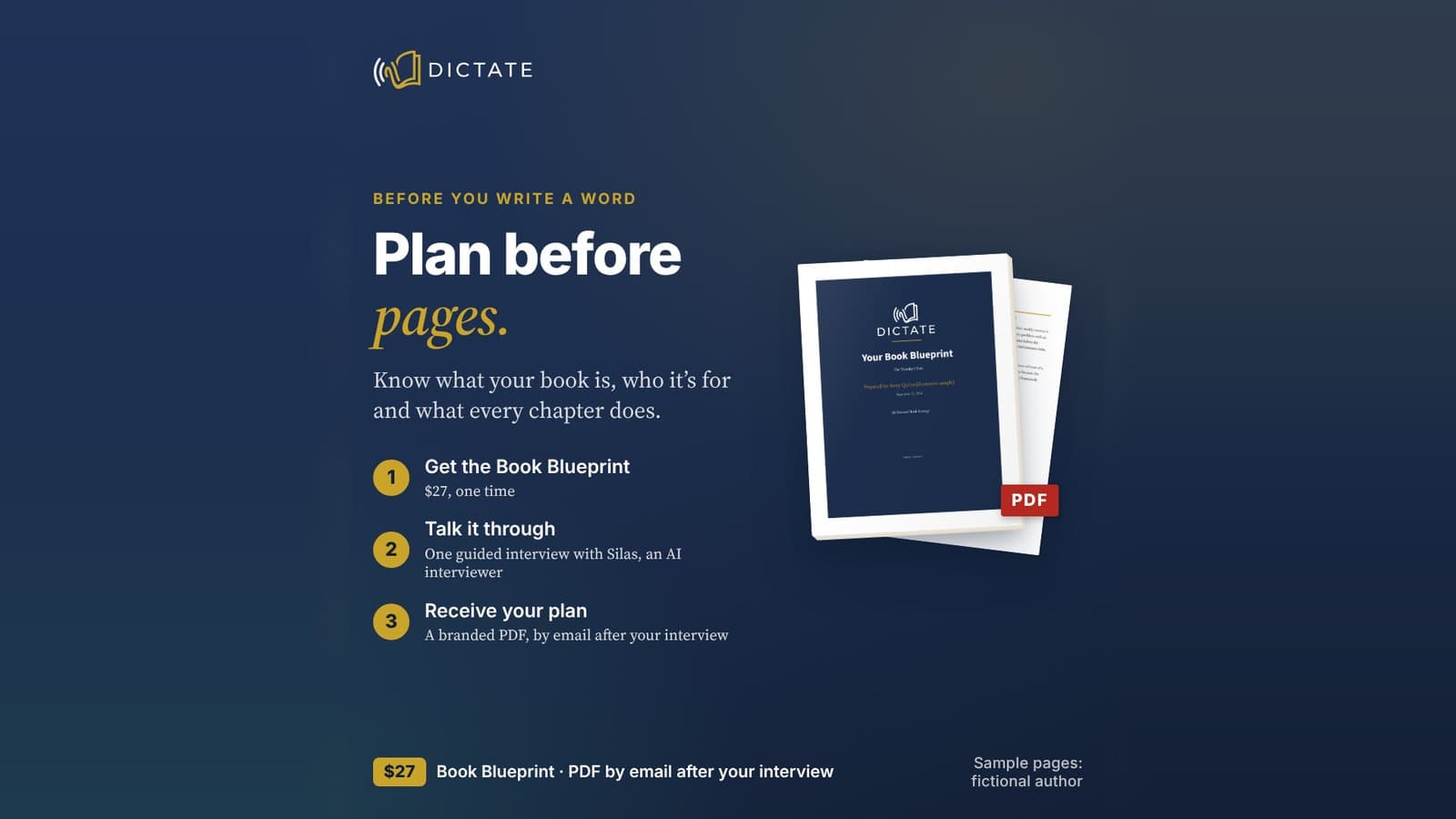
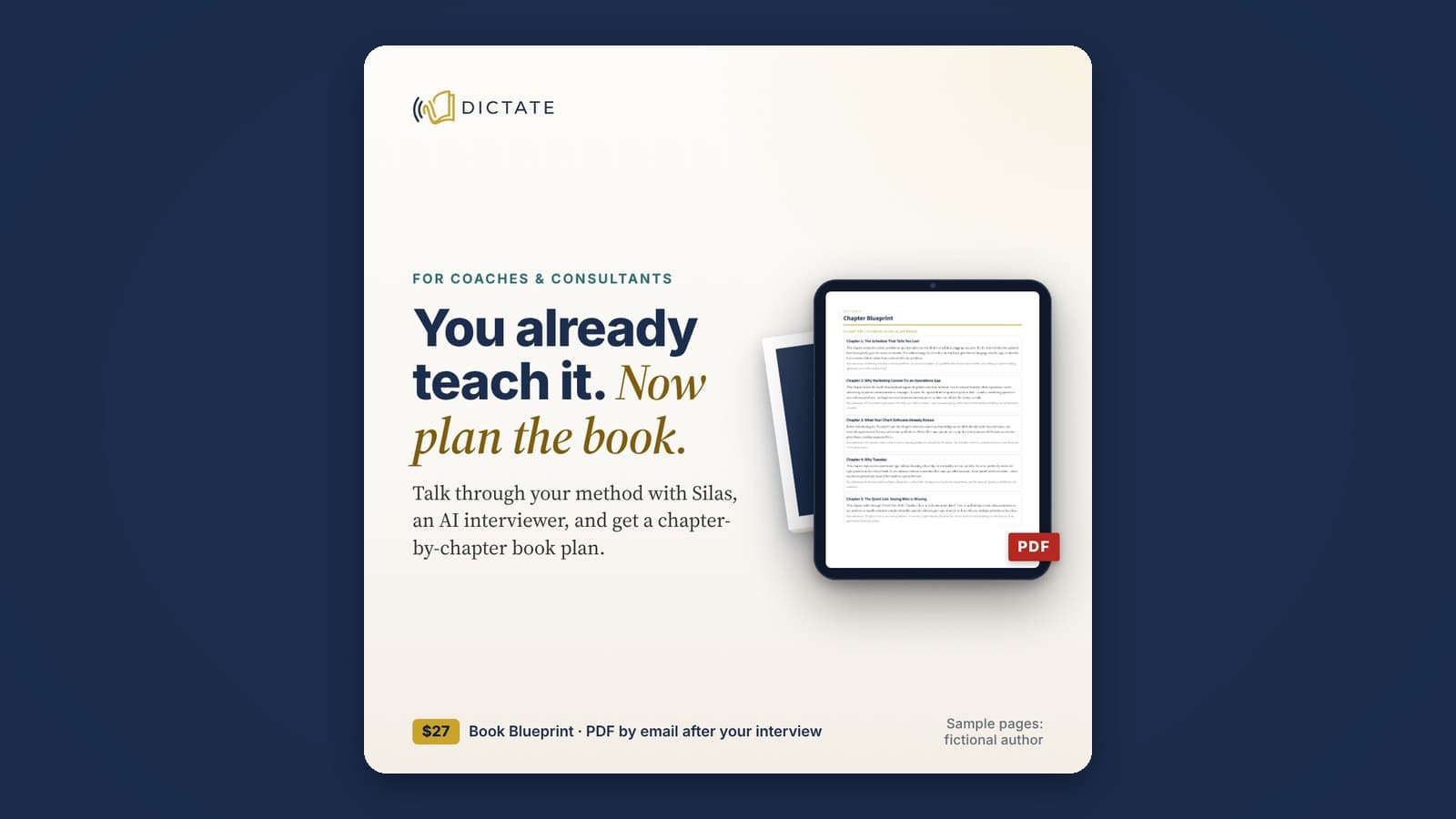
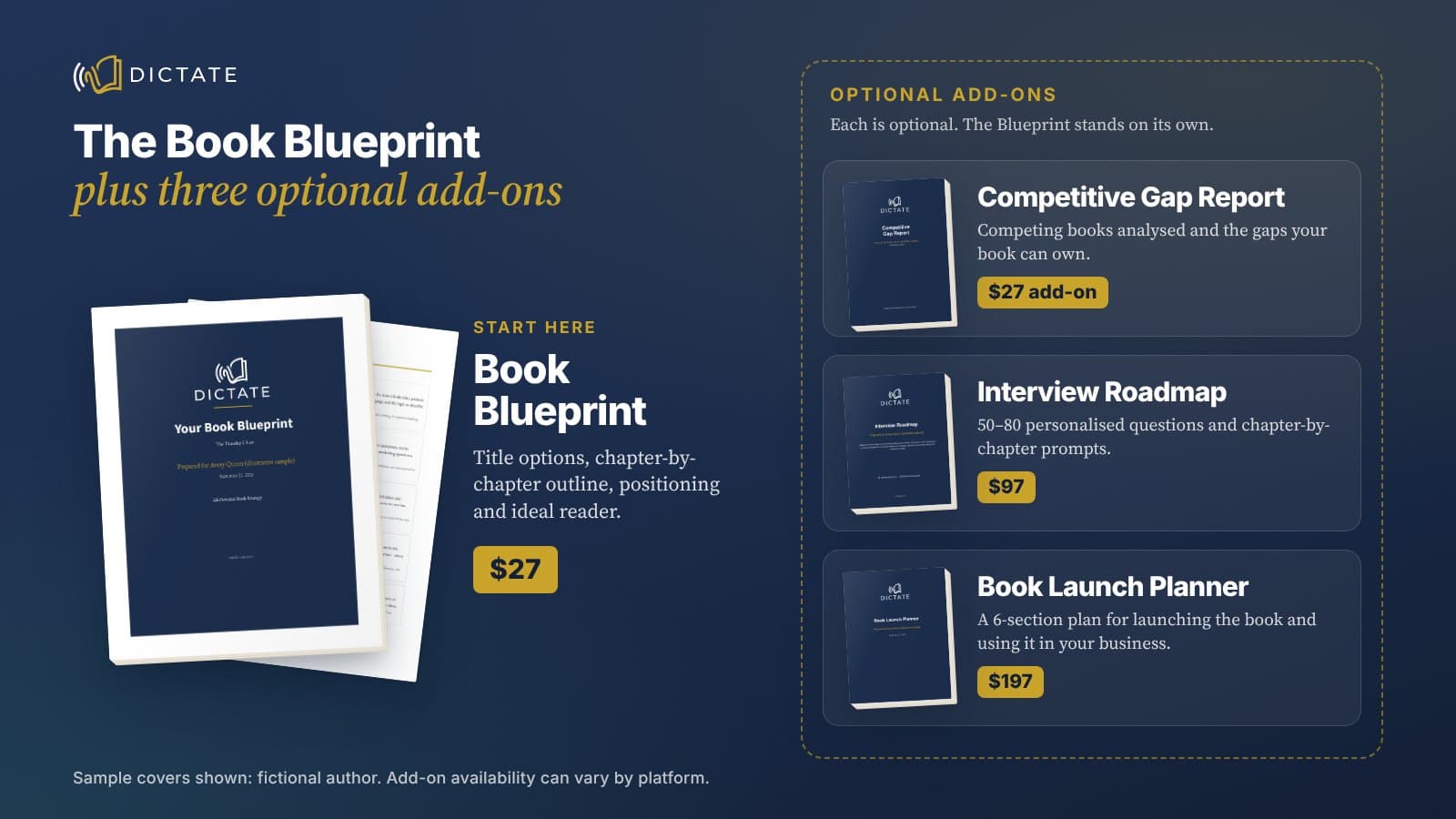
If you've been meaning to write a book about what you teach, Dictate's Book Blueprint is a $27 plan for it. You do one spoken interview with Silas, an AI interviewer, and receive a PDF by email afterward with title options, a chapter-by-chapter outline and a map of the books already in your category. It's a plan, not a finished book. [your affiliate link]
The Dictate affiliate program includes ready-made disclosure wording for email, social posts, paid ads, video and podcasts, and its swipe copy already places the disclosure next to the link. The offer is live on JVZoo and ClickBank, and Digistore24 is also a supported network; the marketplace tracks sales and pays affiliates. Our comparison of JVZoo vs ClickBank vs Digistore24 explains how each network issues links, and our guide to affiliate programs for coaches and consultants covers choosing offers that fit an expert audience. For the full program details, read the program announcement.
FAQ
What is a good affiliate disclosure example?
A short, plain sentence placed right next to the link, such as: 'I earn a commission if you buy through my link.' On social posts, starting with '#ad' or 'Affiliate link' also works. The FTC says no special wording is required, as long as people notice and understand it.
Where should an affiliate disclaimer go?
Close to the link or recommendation, before people click: above the first link in an email, at the start of a caption, at the top of a blog post, spoken and on screen in a video, and spoken in a podcast. A footer, bio or site-wide disclosure page is not enough on its own.
Is '#ad' enough for an FTC affiliate disclosure?
The FTC's guidance says starting a post with '#ad' or 'Ad:' would likely be effective. Burying 'ad' in a long list of hashtags at the end is not. Many affiliates add a plain phrase such as 'affiliate link' for clarity.
Do I need to disclose affiliate links in every post?
Yes. Repeat the disclosure in every email, post, ad, video and episode that promotes the offer. People often see a single piece of content without seeing your other disclosures.
Does one disclosure phrase guarantee compliance?
No. No single phrase guarantees compliance. What matters is whether an ordinary reader, viewer or listener notices and understands the disclosure, and rules vary by country.
Does the Dictate affiliate program provide disclosure wording?
Yes. The Dictate affiliate program includes ready-made disclosure wording for email, social posts, paid ads, video and podcasts, and its swipe copy places the disclosure next to the link. Affiliates must disclose in every medium.
Dictate now runs a free affiliate program for creators whose audiences include coaches, consultants and other experts who want to write a book. Here's what you'd promote, how commissions work on JVZoo, ClickBank and Digistore24, the materials you get and the rules that keep recommendations honest.
The best affiliate programs for coaches and consultants protect the trust your audience already gives you. Here are five questions to ask before you promote any offer, the red flags to avoid, and a worked example using Dictate's program.
JVZoo, ClickBank and Digistore24 often carry the same digital products, but they differ in how you get approved, what your link looks like and where you read your results. Here's a neutral comparison from each network's own help pages, plus how to promote Dictate on each one.
Mike Giannulis··7 min read
Ready to Turn Your Expertise Into a Book?
Start with a free discovery call. No commitment, no pressure — just a conversation about your book.